Master Days and Months in Moroccan Darija
Learning Days and months in Moroccan Darija is one of the first real steps toward speaking naturally. Time words are part of daily life. They are used when making plans, talking about work, remembering the past, or discussing traditions. In Morocco, people rely on Darija every day, not only at home but also in markets, cafés, and streets. If you want to sound natural, you must master days and months in Moroccan Darija.
This guide is simple, practical, and built on how people really speak. No complicated grammar. No unnecessary theory. Just clear explanations, examples, and helpful notes you can use right away.
Why Learning Days and Months in Moroccan Darija Matters
Moroccans speak Darija differently from Modern Standard Arabic. The calendar words may look familiar, but the pronunciation and usage are unique. When you master days and months in Moroccan Darija, you gain confidence in real conversations.
You will be able to:
• Fix appointments
• Talk about routines
• Understand schedules
• Discuss memories and future plans
• Follow conversations naturally
Time expressions are traditional. They have been used the same way for generations, yet they remain essential today.
Days of the Week in Moroccan Darija
The days of the week in Moroccan Darija mostly come from Arabic, but pronunciation is simplified. In daily speech, people rarely use formal forms.
The 7 Days in Moroccan Darija
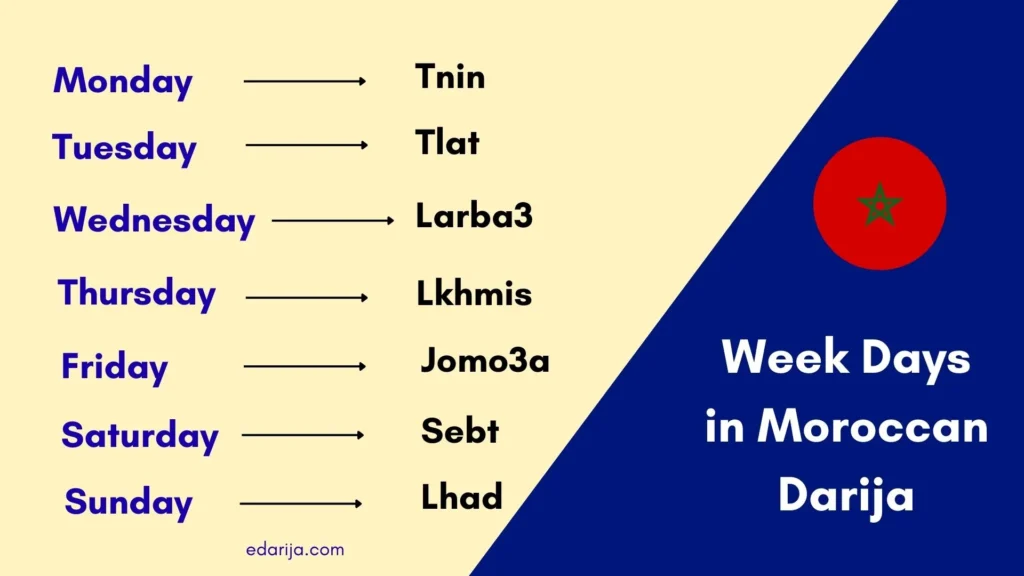
Here are the days in Moroccan Darija as commonly spoken:
• Tnin Monday
• Tlat Tuesday
• Larba3 Wednesday
• Lakhmis Thursday
• Jomo3a Friday
• Sebt Saturday
• Lhad Sunday
These words are used everywhere. At work, at school, in shops, and in casual chats.
Examples Using Days in Moroccan Darija
Examples help fix the words in your memory. Below are natural sentences Moroccans use every day.
• Ghadi nkhdem tnin
I will work on Monday
• 3andi l-imtihan tlat
I have the exam on Tuesday
• Kanmshi l-suq nhar sebt
I go to the market on Saturday
• Jomo3a nhar mzyan
Friday is a good day
–> Explore 15 Funny Moroccan Slang Words You Won’t Find in a Textbook
Notes About Days in Moroccan Darija
There are a few things to remember when learning days and months in Moroccan Darija:
• Days are often used without prepositions
• Pronunciation changes slightly by region
• People often add nhar meaning day for clarity
Example:
• nhar lhad Sunday
• nhar tnin Monday
This is very common in spoken Darija.
Months of the Year in Moroccan Darija
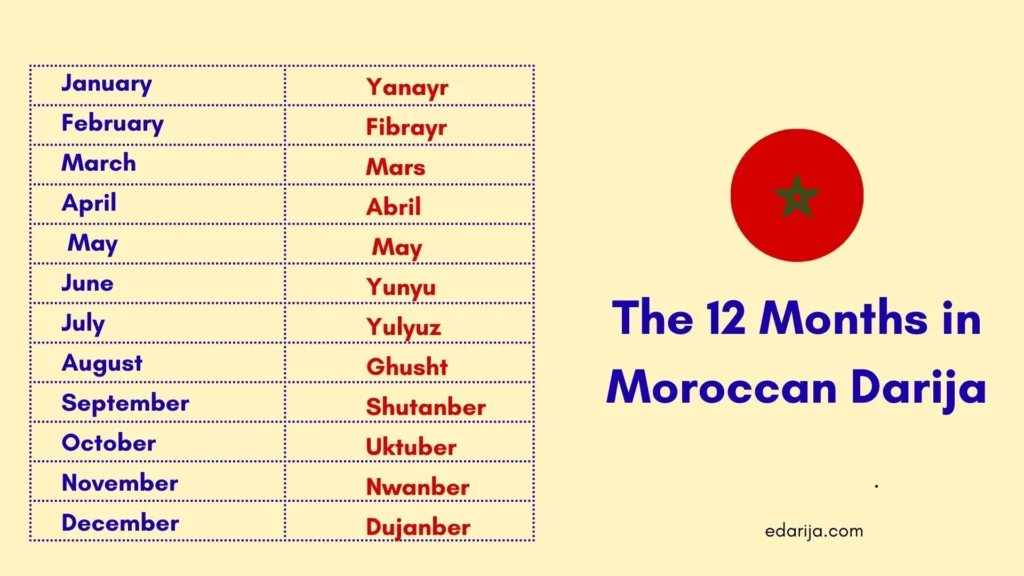
Months in Moroccan Darija are influenced by French and Arabic. Morocco uses the Gregorian calendar in daily life, so these month names are essential.
The 12 Months in Moroccan Darija
Here are the months in Moroccan Darija:
• Yanayr January
• Fibrayr February
• Mars March
• Abril April
• May May
• Yunyu June
• Yulyuz July
• Ghusht August
• Shutanber September
• Uktuber October
• Nwanber November
• Dujanber December
The pronunciation may look different from English or French, but this is how people actually say them.
Want to hear how these words are pronounced and learn even more vocabulary? Follow us on Instagram and Pinterest where we share daily Darija words, audio clips, and tips to boost your learning!
Examples Using Months in Moroccan Darija
Let’s use months in natural sentences.
• Tzadit f Yanayr
I was born in January
• L-3tla f Ghusht
The vacation is in August
• Ghadi nsafr f Uktuber I will travel in October
• Shhar Dujanber bard December is cold
Using Days and Months Together
When you combine days and months in Moroccan Darija, your speech becomes more precise and natural.
Examples:
• Tnin f Mars
Monday in March
• Tlat 15 Yanayr Tuesday, January 15
• Jomo3a f Nwanber Friday in November
Moroccans often say the day first, then the month.
Important Notes About Time in Moroccan Darija
When talking about days and months in Moroccan Darija, keep these points in mind:
• Darija is flexible
• Context matters more than grammar
• Simplicity is preferred
People focus on understanding, not perfection. This is how Darija has always been used.
Talking About the Past Using Days and Months
To talk about the past, Moroccans often use time markers. “li fat = last”
Examples:
• Wa93at nhar tlat li fat It happened Last Tuesday
• L-3am li fat f Yanayr
Last year in January
• Shhar li fat
Last month
These expressions are common and sound natural.
Talking About the Future Using Days and Months
Future plans rely heavily on days and months in Moroccan Darija. . ” Li jay = next “
Examples:
• Ghadi ntlaqaw sebt li jay We will meet next Saturday
• Shhar li jay Ghusht Next month is August
• F l-3am li jay f Mars Next year in March
–> Discover our Free & Online Lessons List here.
Cultural Insight About Days and Months in Morocco
Friday has a special place in Moroccan culture. Jomo3a is associated with prayer, family meals, and rest. Many businesses slow down on Friday afternoons.
Months also reflect seasons strongly. Ghusht means heat and holidays. Dujanber means cold, rain, and family gatherings.
Understanding days and months in Moroccan Darija also means understanding Moroccan life.
Common Mistakes Learners Make
Here are mistakes to avoid:
• Mixing Standard Arabic with Darija pronunciation
• Overthinking grammar
• Translating word by word
Darija is spoken, not written. Listen, repeat, and use it.
Practice Tips to Master Days and Months in Moroccan Darija
Traditional learning works best when combined with daily habits.
• Say the day every morning in Darija
• Name the month out loud
• Use dates when speaking
• Listen to Moroccans carefully
Consistency beats speed.
Mastering days and months in Moroccan Darija is a foundation skill. Once you control time expressions, conversations become easier and more natural. These words have been used for generations and still guide daily life today.
Learn them. Use them. Repeat them. With time, they will feel natural, just like they do for native speakers.